


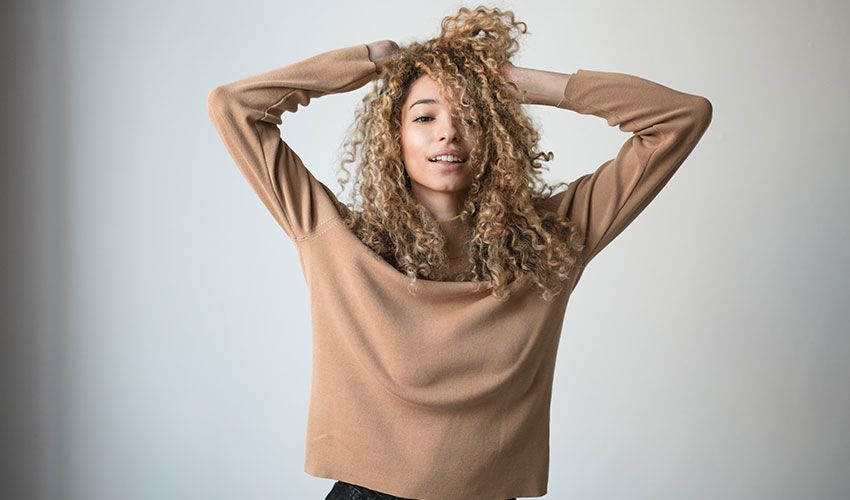
Soft, thick, shiny hair is a sign that your hair is healthy…just like you! Problematic hair or scalp can be a sign of hormonal or metabolic dysfunctions or reflect the presence of a skin disease.
Soft, thick, shiny hair is a sign that your hair is healthy…just like you! Problematic hair or scalp can be a sign of hormonal or metabolic dysfunctions or reflect the presence of a skin disease.
What is Healthy Hair?
Whether straight or frizzy, blond or black, curly or straight, hair averages between 100,000 to 200,000 and varies in length. With an average growth of 1 cm per month, there can be a big age difference between the root of the hair and its tip. So, the end of a 24 cm long hair will be 2 years old, and will have undergone an average of 700 washes! No wonder the spikes show signs of wear…
Hair: A Sign of Good Health
Normally, the cuticle, the outer layer made up of “scales”, should reflect light and have a smooth appearance, so as to limit friction with other hair. The hair must not be too porous: this is often the case with damaged hair, which becomes waterlogged. Wet hair can see its weight increase by 12 to 18%! Nothing is more normal, however, than the appearance of a few split ends on the lengths and a somewhat dull colour. Dermatologists look if hair is healthy and if each follicle is producing strong, shiny, supple hair and if the scalp is healthy. To get beautiful curls with a straightener, it is necessary to master a few techniques. Beyond aesthetic considerations, hair can indeed reflect the state of health of the entire organism. Thus, excessive hair loss, hair that is too brittle or too thin, or a sudden change in the nature of the hair, can be the sign of a hormonal or psychological disorder or drug intoxication. It is therefore necessary to be attentive and consult a dermatologist in case of concern.
Hair-Loss: Stay Vigilant
In both women and men, the feeling of “losing your hair” is a recurring complaint in dermatology practices. Hair loss is not abnormal in itself: we naturally lose 50 to 150 hairs daily. Certain treatments such as curling irons, dyes, exposure to chlorine or the sun or too vigorous brushing can also be the cause of hair-loss that is a little more important than usual. Finally, there are seasonal cycles that make hair-loss worse in the spring and fall.
Pathologies Responsible for Hair-Loss
But many diseases or dysfunctions can also cause hair-loss, starting with stress, high fever or infection. That’s not all: metabolic or hormonal diseases, such as diabetes or thyroid problems (hyperthyroidism or hypothyroidism) can also be involved. Other autoimmune pathologies, such as lupus, scleroderma and/or alopecia areata, which lead to hair-loss in patches, are potential causes of “alopecia”. This is why it is important to consult a dermatologist to quantify hair-loss and obtain an accurate diagnosis (and adequate treatment, if necessary). Finally, note that taking certain medications can cause hair-loss, including certain anti-cancer drugs, steroids and retinoids, or even inferons.
Dry or Brittle Hair?
We all aspire to have shiny, soft and full hair. If it’s too dry, your hair may need to be dried more naturally (without rubbing and without using the hair dryer), cut a little or washed with a milder shampoo. Exposure to chlorine, sea salt and the sun, as well as dyes and bleaching products, can also weaken the cuticle. Dermatologists advise swimmers to wear a bathing cap, to rinse their hair well after swimming, or even to wash it with a shampoo specially formulated to rehydrate the hair. If your hair, which is usually healthy, suddenly becomes dry and brittle, it can however be a sign of a malfunctioning thyroid gland. Hypothyroidism, in particular, is manifested by a certain fatigue, chilliness, but also, often, by dryness of the skin and hair, as well as loss of hair (pubic, axillary, eyebrows)… In case of doubt the doctor will prescribe blood tests to measure the thyroid hormones. Finally, diseases such as Cushing’s syndrome, resulting in excessive secretion of cortisol by the adrenal glands, can be associated with brittle hair. Conversely, hair that becomes too oily often reflects hormonal dysfunction, poor adaptation of contraception or… the start of pregnancy!
Irritated Scalp: React Rapidly
Perhaps more important than the hair, the scalp must be healthy for the hair to grow and renew itself properly. However, diseases affecting the scalp are frequent and diverse: psoriasis, urticaria, eczema, lichen, but also parasitic diseases such as ringworm, or inflammatory diseases such as seborrheic dermatitis. Whether you have scabs on the scalp, flaking, dandruff, itching, it is again important to consult a dermatologist to try to find an appropriate treatment. Because if the scalp is not healthy, the hair will be affected!
Bad Nutrition to Blame?
Although rare in developed countries, nutritional deficiencies can also impact hair health. Deficiencies in iron but also in folic acid, zinc or sulphur amino acids (methionine & cysteine) can lead to hair-loss. To grow, hair indeed needs protein, and certain vegetarian diets that are too strict or unbalanced can lead to deficiencies. It is therefore important to favour a healthy and diversified diet, and to take supplements specially formulated for hair health if a deficiency is suspected.
Natural Products Respect your Hair
Natural hair products are only good for your hair and your health. “Petrochemicals”, we agree that it doesn’t sound clean at all… it really sends shivers down our spines! Sulphates, silicone, synthetic fragrances and parabens… they are everywhere, except in our house! And we explain why we made this choice:
Sulphates: they are used as foaming and cleaning agents. In fact, it is thanks to them that our shampoos lather galore but very often, they irritate the scalp due to their “stripping” effect. The result is that the attacked scalp produces even more sebum to protect itself (hello chip shop), the roots regress faster, so we wash our hair even more often… in short, it’s a vicious circle, without end! We prefer to wash without attacking and gently detoxify to rebalance the scalp, with our Chemical-Free Shampoo for example!
Silicones: they are mainly present in our conditioners and our masks. They bring softness and shine: everything we love! The problem is that silicones are plastic materials that accumulate around the hair (and in the environment). Admittedly, this allows the protection of the hair but by accumulating, it also suffocates the hair fibre which is then weighed down and no longer absorbs the good nutrients. Result? Your hair shines instantly but becomes oily and brittle over time.
Synthetic fragrances: ahh the gourmet and captivating smells of our treatments, we love them as much as the crêpes Suzette! Sorry to break the mood but these synthetic perfumes are mainly used because they are more profitable. The problem is that they contain irritants too.
Parabens: used for more than 80 years in cosmetics, these are preservatives that have been in the spotlight for a few years! We have chosen not to formulate with parabens as a precautionary principle. It is this same principle that constantly guides us to improve our formulas! Opting for natural hair products is also the assurance of cleaner formulas for you, and for the environment!


