


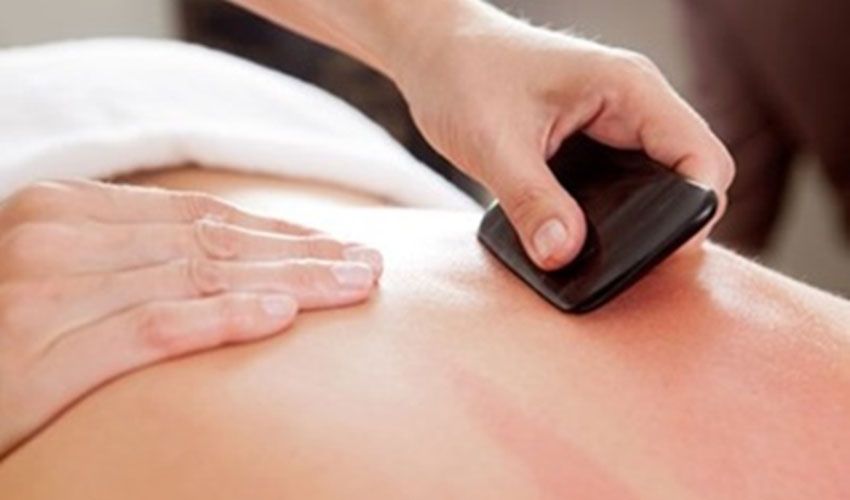
Today’s topic is not something I personally find particularly appealing or enjoyable. However, I must acknowledge that my Akha Hilltribe wife, with her deep-rooted cultural wisdom and traditional practices, swears by it and attests to its remarkable benefits. The therapy in question is known as Gua Sha, or Scraping Therapy, which is a centuries-old healing technique that has been an integral part of traditional Chinese medicine and other Asian healing systems. Gua Sha involves the gentle, yet deliberate, scraping of the skin using a smooth-edged tool, often made of jade, quartz, or other natural materials. My wife uses an empty fish can! This process is believed to stimulate blood flow, promote the release of toxins, and activate the body’s natural healing mechanisms.
Despite my personal reservations, I have observed how this therapy has been revered in my wife’s mountaintop village for generations, helping to alleviate a variety of ailments such as muscle pain, tension, colds, fatigue, headaches and even chronic conditions. She often describes it as a way to clear blockages and restore balance within the body, an ancient remedy rooted in the philosophy of energy flow and holistic health. Her unwavering belief in Gua Sha’s efficacy has prompted me to learn more about its cultural significance and the profound trust placed in traditional healing methods. While it may not be my preferred topic, I respect the deep cultural heritage and personal testimonies that underscore its importance in her life and in the lives of many others who continue to embrace this ancient practice.
As the global emphasis on skincare continues to grow, more people are investing time, effort, and resources into achieving healthier, more radiant skin. Among the many techniques gaining popularity in recent years, Gua Sha has emerged as a standout practise rooted in centuries of tradition and proven benefits. With origins dating back to the Ming Dynasty, this ancient healing art has persisted through the ages, thanks to its multifaceted advantages that extend beyond mere beauty enhancement. Gua Sha is renowned not only for its ability to brighten the complexion and promote a youthful glow but also for its capacity to support overall health, manage ailments, and alleviate discomfort. Its enduring relevance is further bolstered by its accessibility, while many seek professional Gua Sha massages from licensed practitioners, the practice can be easily performed at home, making it an appealing and cost-effective addition to personal skincare routines.
If you’re intrigued by the idea of incorporating Gua Sha into your daily self-care regimen, you’re in the right place. I will guide you through comprehensive instructions on how to use Gua Sha effectively, answer some of the most common questions, and dispel misconceptions. Here’s what you need to know:
- What is Gua Sha?
- How do I use Gua Sha?
- What are Gua Sha’s benefits?
Gua Sha Explained
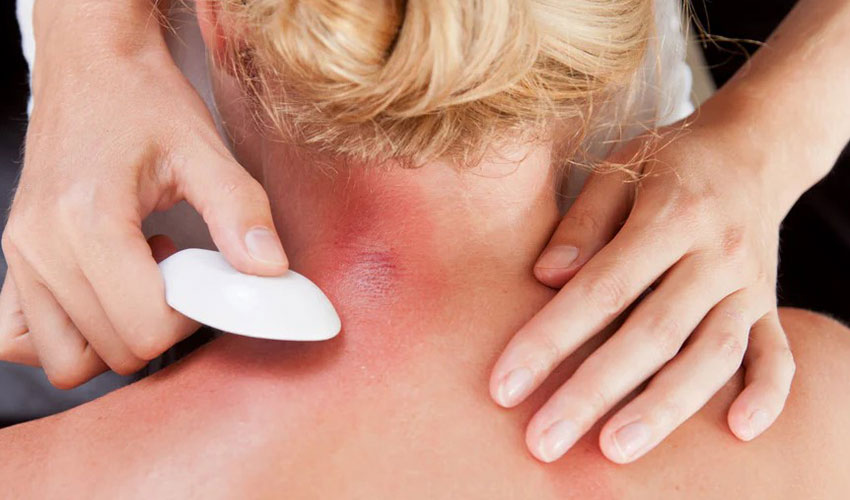
Contrary to popular belief, Gua Sha isn’t limited solely to the flat, semi-precious stone tools, such as jade or quartz that are often associated with the practice. Instead, Gua Sha encompasses a broader philosophy rooted in Traditional Chinese Medicine (TCM). It involves the technique of scraping the skin with a smooth-edged tool to stimulate healing, promote recovery, and facilitate the drainage of toxins and negative energy. The process aims to expand or burst blood vessels, resulting in small red dots called petechiae, which, according to TCM, help increase energy flow and restore balance within the body. While Gua Sha can be applied to the entire body, facial Gua Sha has gained particular popularity for its effectiveness in promoting lymphatic drainage, reducing inflammation, brightening the skin, and contouring facial muscles. Interestingly, the practice isn’t confined to specialised tools; everyday household items like metallic spoons, empty cans, or even your fingers can be used to perform Gua Sha, making it an accessible and budget-friendly self-care technique.
How to Perform Gua Sha
Starting a new skincare routine can seem intimidating, but Gua Sha is surprisingly simple to incorporate into your daily regimen. Follow these steps to maximize its benefits:
Cleanse Your Face: Before beginning, ensure your skin is thoroughly clean. Gua Sha enhances the absorption of skincare products, but if your skin is dirty, impurities like dirt and excess oil could be pushed deeper into the skin along with beneficial serums or oils. Cleanse your face, neck, and décolletage, and also make sure your hands and Gua Sha tool are sanitised to prevent bacteria transfer.
Prep Your Skin: Apply a generous amount of natural facial oil, serum, or moisturiser to your face, neck and chest. This creates a smooth glide for the tool and reduces friction, preventing irritation. If you have sensitive or acne-prone skin, opt for hydrating serums or creams instead of oil. Reapply the product as needed during the massage to maintain lubrication.
Hold the Tool Correctly: A common mistake is holding the Gua Sha tool at the wrong angle. For optimal results, hold it at a 30 to 45-degree angle relative to your skin, applying light to medium pressure. Use lighter pressure to address puffiness and swelling and firmer pressure to relax tense muscles and promote circulation.
Perform the Gua Sha Technique: Begin at your neck, gently scraping upward from the collarbone toward the jawline or earlobe, following the natural lymphatic flow. Use even, smooth strokes, repeating each movement three to five times before moving to the next area. Always work in an upward direction to encourage drainage and prevent sagging. The entire process typically takes about three to five minutes, making it easy to incorporate into your daily routine.
Targeted Areas
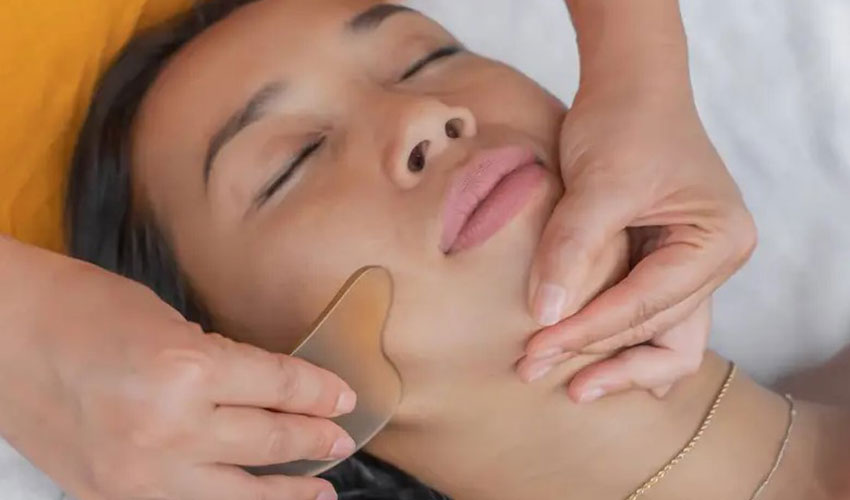
Neck: Place the long edge of the tool on your skin and make upward strokes from your collarbone to your earlobe, applying medium pressure. Repeat on both sides.
Throat: Using the notched edge of your tool, gently scrape from the collarbones up toward your chin, applying light pressure.
Jaw: Begin by using the double-notched edge of your Gua Sha tool. Place it gently at the centre of your chin, then glide it along your jawline in a smooth, upward motion until you reach the base of your ear. Repeat this process on the opposite side, ensuring each stroke is deliberate and gentle. This technique helps to sculpt and define the jawline, promoting lymphatic drainage and reducing any puffiness or tension accumulated in this area. Regularly massaging the jaw with this method can also help alleviate muscle tightness caused by stress or clenching, contributing to a more relaxed and contoured appearance.
Cheeks: Next, position the long edge of your Gua Sha tool against your skin. Starting from the centre of your face, gently drag the tool upward and outward across your cheek, passing just past the cheekbone and stopping just before reaching your ear. This upward motion stimulates circulation, encourages lymphatic drainage, and helps lift sagging skin. Repeat on the other side, maintaining a slow, controlled pace. This technique not only enhances blood flow but also promotes a natural glow, reduces puffiness, and can help diminish the appearance of fine lines over time.
Eyes: For the delicate eye area, use the long, curved edge of the double-notched tool. Gently place it against the inner corner of your eye, ensuring minimal pressure, and sweep outward toward your hairline. This light, outward motion helps to drain excess fluids, reduce puffiness, and diminish dark circles. Be especially gentle here, as the skin around the eyes is thin and sensitive. Repeating this gentle sweep on each eye can refresh tired-looking eyes and promote a brighter, more awake appearance.
Eyebrows: Position the tool on the middle of your eyebrows, with the double-notched side aligned along the brow line. Slowly glide the tool outward toward your hairline, following the natural shape of your brow. This movement helps to relax tension in the brow muscles, which can contribute to headaches or furrowed brows, and promotes better circulation in this area. Repeating this motion can also help lift and define the brow area, giving your face a more open and expressive look.
Forehead: Finally, use the long edge of your Gua Sha tool to gently drag from the top of your eyebrows upward toward your hairline. Repeat on both sides, working in smooth, upward strokes. This technique helps to smooth out fine lines, relax tense muscles and promote lymphatic drainage across the forehead. Regularly massaging this area can reduce the appearance of horizontal lines and give your skin a more relaxed, youthful glow.
By following these simple steps, you can harness the power of Gua Sha to improve your skin’s health, reduce tension, and support overall well-being. Whether you choose to visit a professional or perform it yourself, Gua Sha offers a natural, cost-effective way to enhance your skincare routine and embrace a holistic approach to beauty and health.
How Often to Perform Gua Sha?
For optimal results, I recommend incorporating Gua Sha into your skincare routine two to three times per week. Consistency is key, regular practice allows the benefits to accumulate and become more noticeable over time. The time of day can also influence your results: a morning Gua Sha session can help reduce puffiness, energise your skin, and set a fresh tone for the day, while an evening routine can relax tense muscles, promote lymphatic drainage, and help you unwind before bed. Listening to your skin’s needs and maintaining a steady routine will ensure you enjoy the full spectrum of benefits Gua Sha offers.
The photo below shows my wife after a 20-minute Gua Sha session on her back.

Gua Sha’s Benefits
When performed correctly and regularly, Gua Sha can deliver remarkable improvements in both your skin’s appearance and your overall well-being. Some of the most notable benefits include:
- Stimulating Blood Circulation: Enhances blood flow to targeted areas, resulting in a healthier, more radiant complexion.
- Boosting Collagen Production: Supports skin elasticity, helping to diminish fine lines and wrinkles over time.
- Reducing Dark Circles & Puffiness: Temporarily tightens skin and promotes lymphatic drainage, brightening tired eyes.
- Decreasing Inflammation & Pain: Eases muscle tension, alleviates headaches, and reduces swelling caused by fluid retention.
- Sculpting & Contouring: Defines facial features, especially along the jawline and cheekbones, for a more sculpted appearance.
Beyond aesthetic benefits, Gua Sha has been linked to potential health advantages, such as alleviating symptoms related to conditions like hepatitis B, where it may help reduce liver inflammation; supporting people with Tourette’s Syndrome when combined with other traditional therapies; and providing relief from chronic migraines by easing tension and promoting relaxation.
When to Avoid Gua Sha
While Gua Sha is generally safe when practiced correctly, certain conditions warrant caution or avoidance:

Final Words
Rooted in ancient wisdom yet embraced by modern skincare enthusiasts, Gua Sha offers a holistic approach to beauty and health. When performed with proper technique, it can brighten your complexion, improve circulation, reduce muscle tension, and promote a sense of well-being. This versatile practice is accessible, cost-effective, and adaptable to your individual needs, making it an excellent addition to your self-care routine.
“Release, rejuvenate, radiate with gua sha.” – Unknown


