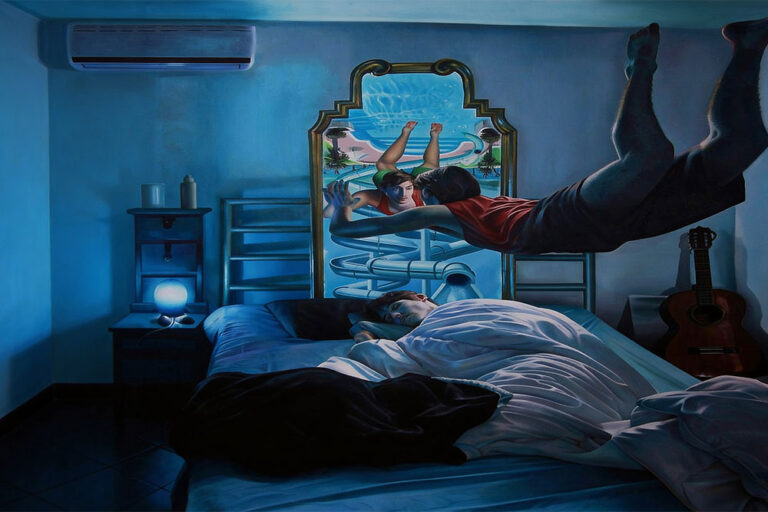
I believe we have the truth inside us, if we tap into it or get out of the way. All my life I knew these truths, knew something shouldn’t be like this, or done like that, but society knew best. Until my awakening in 2003, I realised most of what I knew was lies, or manipulated. Everything changed, I trusted my intuition and what felt right. Mirrors was just one tiny part of it, I had a post on Instagram many years ago about Mirrors in general, the negative side. But As we move in these strange times, as people awaken more and become more aware, or even have more trouble sleeping, I thought perfect time to share what I learned. Here is the whole house mirrors post I did on Instagram back in 2022.
I knew having a mirror in my bedroom felt wrong, maybe you also felt it or feel it now, thinking about it. I’m here to say trust yourself. The why it’s wrong is to validate what you intuitively know to be right in your feelings. This idea, I felt is not knew, it’s found across multiple traditions, that the bedroom is not just a place to sleep, but a space where your energy becomes soft, open, and highly receptive. In that state, what surrounds you matters far more than during the day. Among the objects most consistently warned about in these traditions is the mirror.

For years I didn’t understand when spiritual masters would say the false self, I understood the ego. But when it was like the not you, it lost me. Eventually I understand it to be, the body, the status, the name, the lifestyle. That is not us, we are the spirit inside. It was a matter of me not understanding, because as a child when I was at infant school, I got into trouble, I was so scared. The only thing that helped came naturally to me, and I still can see the moment now. I’m in the headteachers office and I’m saying to myself… You’re ok, you’re in here, we are safe. The life inside the body, the real me, the spirit. What was going on outside didn’t matter. So therefore during waking life, a mirror reinforces the physical self. It constantly reminds you of your form, your appearance, your boundaries. While sleep is the opposite. It is a temporary dissolution of that identity, a return to something more formless and regenerative.
I conclude with this, that having a mirror present, particularly one facing the bed, symbolically anchors you to the physical world when your system is trying to let go of it. if you sit with that idea a little longer, it begins to feel less like superstition and more like a subtle interference. Because sleep is not just rest. It is a kind of return. A return to something prior to the roles, the responsibilities, the image you carry in the world. It is the one time each day where the body softens its grip on identity, and the mind releases its need to define and control. Sometimes I used to do these massive jolts in my bed, I had no idea, my gran told me it was you coming back into the body. I think it’s true.
So based on all that, you can imagine a mirror holds you here, almost vulnerable I would go as far as saying. A mirror holds form. It reflects shape. It quietly insists on “this is you” even when you are trying to dissolve that very idea. Even in darkness, even when you are not consciously looking, the presence of that reflective surface remains. It is like an anchor in the room, keeping part of your awareness tethered to the physical plane. There is also something deeper, almost instinctive, in the human response to reflection. Across cultures and time, reflections have never been treated as entirely neutral. They carry a certain weight. A sense that they are not just showing, but also holding. When the mind is alert and grounded, this does not matter. But when you are asleep, when perception becomes fluid and symbolic, the environment begins to interact with you in a different way.

A mirror in your bedroom at night, can create a kind of subtle feedback loop. Not something dramatic or frightening, but enough to disturb the purity of stillness. Enough to keep the system slightly engaged, slightly alert, when what it truly needs is complete surrender. This is why many old traditions, without needing to explain it scientifically, simply advised removing mirrors from the bedroom, or at the very least covering them at night. Not out of fear, but out of respect for the depth of what sleep actually is.
Because the goal is not just to sleep, but to disappear for a while. To step out of the constructed self, and return to the quiet, unformed presence that sits underneath it all. And anything in the room that pulls you back into identity, even subtly, works against that process. So the simplest shift can sometimes be the most powerful. A bedroom without reflection becomes a different kind of space. More enclosed. More internal. More like a cocoon than a stage. And in that environment, the body lets go more easily, the mind sinks more deeply, and the spirit, whatever you choose to call it, is given the space to truly rest.
Also whilst on this subject, other things that would really help are in our Sleep Health section here. In the Guides you’ll find a whole guide on all things to help sleep. But actually I didn’t cover the mirrors factor in that Guide.

In older European folklore, mirrors were treated with a kind of quiet caution. It was common practice to cover them at night, particularly in bedrooms or in homes where someone was ill. The belief was that mirrors could act as thresholds, not in a literal sense, but as surfaces that hold impressions. When you sleep, your mind enters a more fluid state, closer to dreaming and memory. In that condition, a mirror was thought to “echo” fragments of consciousness back at you, creating a loop that prevents full mental stillness.
This idea appears again and again across old European thought, not just in superstition, but in philosophy and storytelling. In many traditions, the reflection was never considered entirely “you,” but something slightly delayed, slightly altered. Even in the writings of Plato, reflections and shadows were used as metaphors for incomplete reality, something that resembles truth but is not the thing itself. A mirror, in that sense, does not just show you, it creates a second version of you, one step removed from your true state.
In medieval households across parts of Germany and Austria, it was believed that a sleeping person was more “open,” not vulnerable in a fearful sense, but unguarded. The soul, or what they would have called the animating essence, was thought to wander slightly during sleep, drifting between memory and dream. A mirror facing the bed was said to confuse this process, reflecting not just the body, but the subtle movement of this inner life, as if the dream state could become tangled in its own image.

There are also quieter traditions from rural France and parts of Italy where mirrors were covered after sunset simply to “let the house rest.” The idea was that every object holds a kind of presence, and reflective surfaces were considered especially active, always receiving, always returning. At night, when everything else softened and dimmed, a mirror remained alert, holding light, shape, and movement. Covering it was less about fear and more about creating a complete stillness in the room, a kind of environmental silence. Even the act of mourning carried this symbolism. After a death, mirrors were often draped, not just to prevent vanity or distraction, but because it was believed that reflections could “hold” something of the person who had passed. In parts of England and Ireland, this was done to allow a clean separation, so that nothing lingered between states. The mirror, again, was treated as a surface that does not forget quickly.
From a more subtle, holistic perspective, the issue is not superstition but sensitivity. Sleep is a process where the body down-regulates, repairs, and reorganises itself. This requires a feeling of complete safety. A mirror, especially one that reflects your body while you sleep, introduces a form of low-level stimulation. Even if you are not consciously aware of it, your brain continues to scan your environment. Catching glimpses of movement or form in a reflective surface can keep part of the mind alert, preventing the deepest stages of rest. In that sense, these old European practices were less about belief and more about observation refined over generations. They noticed that when the environment becomes simpler, darker, and less responsive, sleep deepens. When there is nothing looking back, nothing echoing from or movement, the mind is more willing to fully let go.

In Chinese Feng Shui, a mirror is never treated as a neutral object. It is understood as a dynamic tool that interacts directly with qi, the life force that flows through a space. Rather than simply reflecting what is there, a mirror is said to move, redirect, and amplify energy. This is why it is used very deliberately, often to expand light, open up confined areas, or symbolically “double” abundance. But that same power is exactly what makes it problematic in a bedroom at night.
Within Feng Shui, the bedroom is considered one of the most yin spaces in a home. Yin represents stillness, darkness, softness, and inward restoration. Sleep itself is a deeply yin process. The body is not just resting physically, it is consolidating energy, repairing systems, and returning to a state of internal balance. For this to happen properly, the environment must support containment of qi, not movement.
A mirror changes that completely. Because it reflects and effectively “repeats” whatever it faces, it is believed to activate qi, keeping it circulating rather than allowing it to settle. When placed in a bedroom, especially where it reflects the bed, it creates a constant energetic feedback loop. Instead of energy gathering around the body and grounding into stillness, it is symbolically pushed outward and then returned again, over and over. This is described in Feng Shui as a kind of agitation, not necessarily dramatic, but persistent enough to disturb deep rest.
One of the most well-known Feng Shui principles is that a mirror should never reflect the bed. The reasoning is layered. On one level, it is said to “double” the presence in the bed, which traditionally was associated with inviting a third energy into a relationship, creating subtle disharmony between partners. On a deeper level, it relates to the idea that during sleep, the body’s qi becomes more exposed and less defended. Seeing the body reflected, even unconsciously, is thought to prevent that full surrender, as if part of the system remains on alert.
Feng Shui practitioners also speak about something called “shen disturbance.” Shen refers to the spirit or mind, the aspect of consciousness that resides in the heart. A calm shen leads to deep, undisturbed sleep, while a disturbed shen results in restlessness, excessive dreaming, or waking during the night. Mirrors, because of their constant activity, are believed to unsettle the shen if placed improperly, especially in intimate spaces like the bedroom.
There is also an important distinction in Feng Shui between daytime and nighttime function. During the day, yang energy dominates. Yang is active, bright, and outward-moving, so a mirror’s ability to stimulate and expand qi is beneficial. It can bring vitality into a space, enhance natural light, and create a sense of openness. But at night, the environment should transition fully into yin. If a mirror continues to activate qi in a space that is meant to be quiet and contained, it creates an energetic mismatch. The body is trying to power down, while the room is subtly encouraging movement.
Traditional Feng Shui adjustments are simple but very intentional. Mirrors in bedrooms are either positioned so they do not reflect the bed, covered at night, or removed entirely. The goal is not to eliminate mirrors, but to ensure that their function aligns with the purpose of the space. A bedroom is not meant for expansion or stimulation. It is meant for restoration, intimacy, and stillness.

In Vastu Shastra, mirrors are considered active elements that replicate and extend energy rather than simply reflect it. When placed in a bedroom, especially facing the bed, they are said to “double” whatever they reflect. In the case of a couple, this symbolically disrupts unity, introducing a sense of division or imbalance over time.
On a deeper level, Vastu teaches that sleep is a period when prana, the body’s vital energy, withdraws inward to restore, repair, and stabilise. This process depends on containment and stillness. A mirror, by reflecting the body and the space, creates a subtle outward projection of that energy, as if it is being dispersed rather than allowed to settle fully.
This can manifest as lighter sleep, increased dreaming, or a lingering sense of unrest. For this reason, mirrors are ideally kept away from directly facing the bed, or covered at night, so the environment remains simple, contained, and supportive of deep, undisturbed rest.

I think I have covered enough now. Can we all agree, they’re bad. My bedroom now is simple, a bed, and a small table to put my watch, necklace on, a book or a glass of some elixir I made.But really it is interesting is that across cultures that never interacted directly, the same instinct appears. When the body is most vulnerable, when consciousness is at its quietest, reflective surfaces are treated with caution. Not because they are dangerous in a physical sense, but because they interfere with the quality of stillness. Keep it simple, everything, health, thoughts, feelings, use your mind when you need it. The rest of the time, keep it on standby and enjoy the moment.
So today make your bedroom a cocoon, not a place of thoughts and activity. Remove the mirrors, you will feel a noticeable shift. I’m sure most people don’t have TVs in their room anymore, but you must get that out. Ideally, leave your phone downstairs too. When you wake up look at the outdoor light first, not the light on the phone. You and the space will feel calmer, heavier in a good way, more contained. And sleep, which is one of the most powerful healing states we have, is allowed to deepen without interruption. I kept thinking of The Beat Mirror in the Bathroom, the whole time I wrote this, it needs a re-work. Anyway be happy, be healthy, be young at heart.
Bless you
Tom