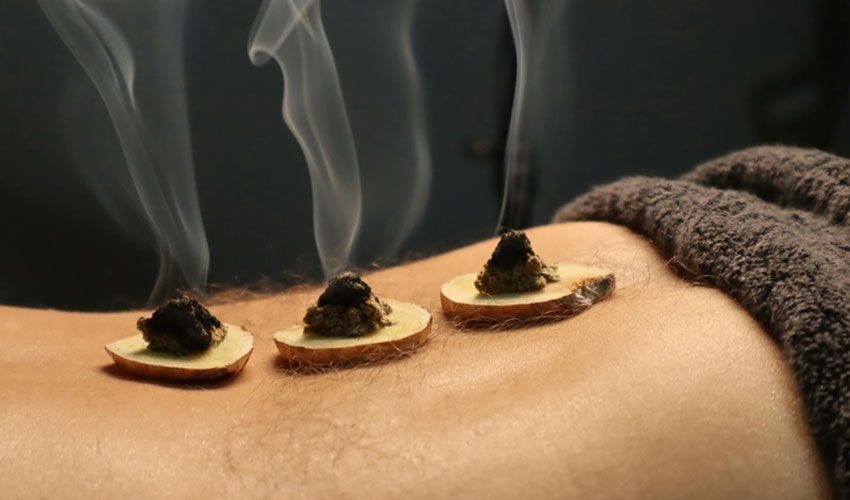
”Moxibustion, what is that?” You might ask. Well, it is nothing new as in Traditional Chinese Medicine this treatment has been used for thousands of years. Keep on reading as later in this article, I will share a detailed account of my personal experience with Moxibustion here in Chiang Mai, providing insights into the treatment process, my observations, and the overall impact it had on my well-being. I hope this comprehensive reflection will offer valuable perspective for those considering this traditional therapy and inspire a deeper understanding of its potential benefits. Moxibustion is a traditional Chinese medicine technique that involves the application of heat to specific points on the body, typically corresponding to acupuncture points. This practice utilises the burning of dried mugwort (Artemisia vulgaris), known as moxa, which is carefully placed either directly on the skin or held close to it, to stimulate circulation, promote healing, and restore balance within the body’s energy systems, often referred to as Qi.
The origins of Moxibustion date back thousands of years and it has been an integral component of holistic health approaches in East Asian medicine. Its primary purpose is to enhance the body’s natural defenses, alleviate pain, and address various health conditions ranging from digestive issues and menstrual disorders to chronic pain and fatigue. The heat generated by Moxibustion penetrates deeply into tissues, purportedly invigorating blood flow and dispelling cold and dampness, concepts rooted in traditional Chinese medical theory. Practitioners may employ different methods of Moxibustion, including direct application, where moxa is placed directly on the skin and then removed after warming, or indirect techniques, such as using moxa sticks or cones held near the skin surface. The choice of method depends on the condition being treated and the practitioner’s assessment.
In recent years, Moxibustion has garnered interest beyond traditional practices, with some modern studies exploring its potential benefits in areas such as pain relief, immune modulation, and even during pregnancy to turn breech babies. However, it is essential to consult qualified healthcare professionals before considering Moxibustion as a treatment option, especially for people with certain health conditions or sensitivities. In summary, Moxibustion is an ancient therapeutic modality that combines heat therapy with traditional Chinese medical principles, aiming to promote health, balance, and well-being through targeted heat application at specific points on the body. The practice of Moxibustion can be performed in several ways, primarily categorised into direct and indirect methods:
Direct Moxibustion
At its core, Direct Moxibustion operates on the principle of applying heat to stimulate circulation, promote qi (vital energy) flow, and dispel cold and dampness from the body. The heat generated by burning mugwort directly on the skin is believed to induce a local hyperemia (increased blood flow), facilitate immune responses, and restore balance within the body’s meridian system.
Techniques of Direct Moxibustion
There are two primary techniques within Direct Moxibustion:
- Scarring (Shuǐjiāo) Moxibustion: This involves placing small moxa cones directly on the skin, which are then ignited and allowed to burn until a blister or scar forms. This method is often used for chronic conditions and is believed to have a long-lasting effect.
- Non-Scarring (Yánjiāo) Moxibustion: In this variation, moxa cones are burned directly on the skin but are removed before blistering occurs, minimising tissue damage. This approach is considered safer and is suitable for a broader range of patients.
Procedure
- The practitioner selects an appropriate acupoint based on the patient’s condition.
- A small amount of moxa is formed into cones or sticks.
- The moxa is ignited and placed directly on the skin (for scarring) or on a protective layer (for non-scarring).
- The heat is applied until the desired therapeutic effect is achieved, often indicated by redness, warmth, or mild discomfort.
- In scarring techniques, the process may be repeated multiple times, with scars serving as indicators of treatment efficacy.
Clinical Applications
Direct Moxibustion is traditionally used to treat a variety of conditions, including:
- Gastrointestinal Disorders: Such as diarrhoea, dysentery, and abdominal pain.
- Gynecological Issues: Including irregular menstruation, infertility, and postpartum recovery.
- Musculoskeletal Problems: Such as joint pain, muscle stiffness, and arthritis.
- Cold & Deficiency Syndromes: Characterised by cold limbs, fatigue, and general weakness.
- Wound Healing & Ulcers: Promoting tissue regeneration and reducing stagnation. Its efficacy is often attributed to its ability to stimulate local blood flow, modulate immune responses, and activate meridian pathway
Safety Considerations
While effective, Direct Moxibustion carries certain risks:
- Tissue Damage: Especially with scarring techniques, there is a risk of burns, scars, or infections.
- Pain & Discomfort: The heat can cause discomfort or pain if not properly managed.
- Allergic Reactions: Some people may have sensitivities to mugwort or other materials used.
- Contraindications: Not recommended for patients with skin infections, open wounds, or certain skin conditions. Practitioners must Exercise caution, ensure proper sterilization, and tailor treatment to individual patient needs.
Contemporary Research & Perspectives
Modern scientific investigations have sought to elucidate the mechanisms underlying Moxibustion’s effects. Studies suggest that heat stimulation can influence neurovascular responses, modulate cytokine production, and impact the autonomic nervous system. Some research indicates potential benefits in managing conditions such as osteoarthritis, breech presentation in pregnancy, and certain gastrointestinal disorders. However, high-quality clinical trials are still needed to establish standardised protocols and validate efficacy. Integrating traditional knowledge with modern biomedical research continues to be a focus within the field.
Conclusion
Direct Moxibustion remains a significant component of traditional Chinese medicine, valued for its unique approach to stimulating healing through heat application. Its techniques, rooted in centuries of practice, offer potential therapeutic benefits across a spectrum of health conditions. As research advances, a deeper understanding of its mechanisms and optimal applications will enhance its integration into contemporary healthcare, ensuring safe and effective use for patients worldwide.
Indirect Moxibustion
Unlike direct Moxibustion, where the burning moxa is placed directly on the skin, potentially causing blistering or burns, indirect Moxibustion involves placing a barrier or medium between the burning moxa and the skin. This approach ensures a controlled, gentle transfer of heat, reducing the risk of adverse effects while maintaining therapeutic benefits.
Techniques of Indirect Moxibustion
Several methods fall under the umbrella of Indirect Moxibustion, each with unique characteristics:
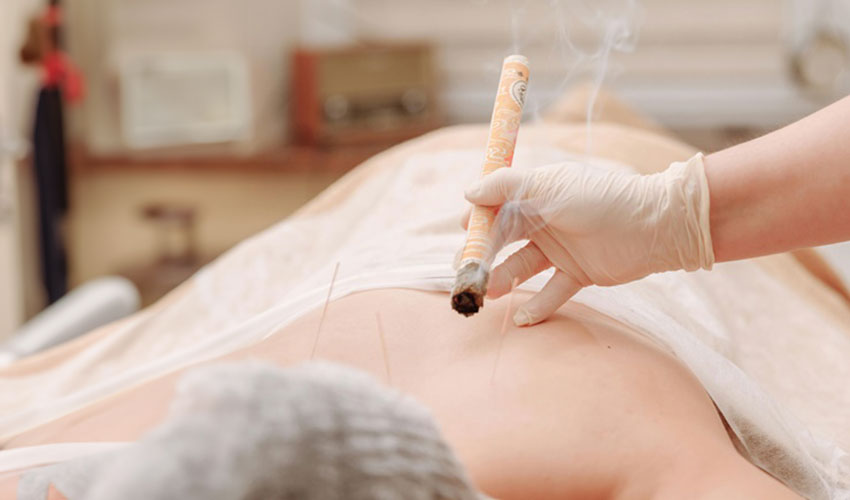
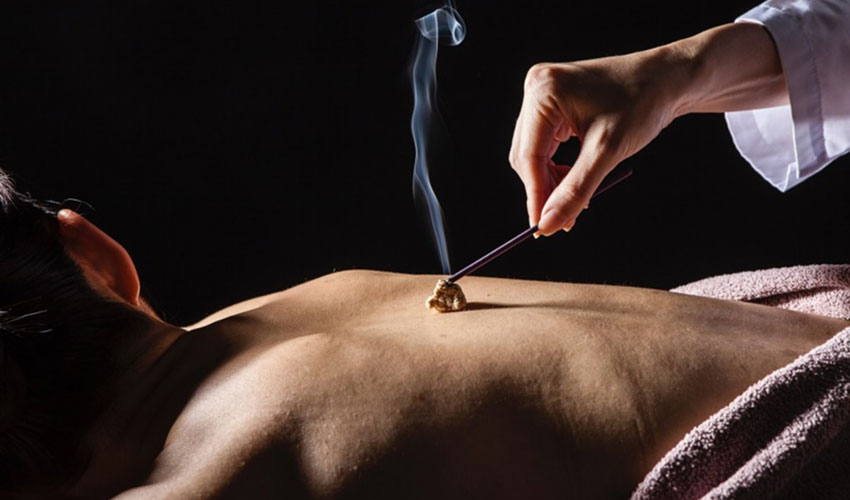
- Moxa Stick Method: A cone-shaped or stick-shaped moxa is ignited and held at a specific distance from the skin surface over the targeted acupoint. The practitioner maintains a safe distance to deliver heat without contact, allowing the heat to penetrate deeply.
- Moxa Box or Cigar Method: A small box or cigar-shaped moxa is lit and placed on or near the skin, often with a barrier such as ginger slices, garlic, or salt in between. The heat from the burning moxa warms the acupoint indirectly.
- Moxa with Ginger or Garlic: Thin slices of ginger or garlic are placed on the skin at the acupoint, and a lit moxa cone or stick is placed atop. The herbal slices act as insulators and carriers of medicinal properties, enhancing the therapeutic effect.
- Moxa with Salt or Other Barriers: Salt or other insulating materials are used to modulate heat transfer and protect the skin, providing a controlled and sustained warming effect.
Materials Used in Indirect Moxibustion
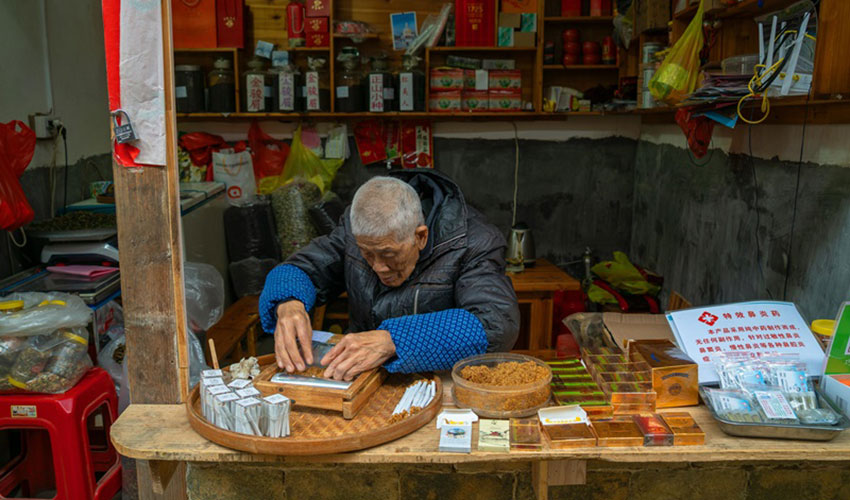
- Moxa (Artemisia vulgaris): The primary material, prepared as cones, sticks, or cigars.
- Barriers: Ginger slices, garlic, salt, or other insulating substances.
- Tools: Moxa holder, lighter or candle, and sometimes specialised moxa boxes.
Therapeutic Benefits & Indications
Indirect Moxibustion offers a range of health benefits, supported by both traditional practices and emerging scientific research:
- Pain Relief: Effective in alleviating musculoskeletal pain, including lower back pain, osteoarthritis, and menstrual cramps.
- Enhancement of Immune Function: Stimulates immune responses, potentially reducing the frequency and severity of infections.
- Gastrointestinal Regulation: Used to address digestive issues such as diarrhea, constipation, and abdominal pain.
- Reproductive Health: Supports fertility, menstrual regulation, and postpartum recovery.
- Chronic Conditions: Beneficial in managing chronic fatigue, asthma, and certain neurological conditions.
Mechanisms of Action
The therapeutic effects of Indirect Moxibustion are attributed to several mechanisms:
- Thermal Stimulation: The gentle heat penetrates deep tissues, promoting blood circulation and qi flow.
- Reflexive Responses: Heat stimulation at acupoints triggers neural responses that influence organ function.
- Herbal & Chemical Effects: When using herbal barriers like ginger or garlic, active compounds may be absorbed through the skin, providing additional medicinal benefits.
- Modulation of Immune & Endocrine Systems: Heat and herbal substances can influence immune modulation and hormonal balance.
Safety Considerations
When performed correctly, Indirect Moxibustion is generally safe. However, practitioners should adhere to safety protocols:
- Maintain appropriate distance and duration to prevent burns.
- Use barriers to protect sensitive skin areas.
- Monitor for adverse reactions such as skin irritation or allergic responses.
- Ensure proper ventilation to avoid inhaling smoke or fumes.
Conclusion
Indirect Moxibustion is a refined and effective modality within traditional Chinese medicine, combining heat therapy with herbal insulation to promote healing and restore balance. Its versatility, safety profile, and broad therapeutic applications make it a valuable tool for practitioners and people seeking natural health solutions. As scientific understanding advances, the integration of Indirect Moxibustion into holistic treatment plans continues to grow, reaffirming its relevance in contemporary integrative medicine.
My Experience with Indirect Moxibustion – A Natural Way to Alleviating Back Pain
As someone who has struggled with chronic back pain for several years, I am always exploring alternative and complementary therapies to find relief. After numerous consultations with healthcare professionals and trying various treatments, I decided to explore traditional Chinese medicine techniques, specifically Moxibustion. My trip with Indirect Moxibustion has been transformative, and I would like to share my experience in detail.
My Initial Motivation & Expectations
My back pain was persistent, often dull but occasionally sharp, and significantly impacted my daily activities. I was sceptical but open-minded about trying Moxibustion, especially after reading about its potential to improve circulation, relax muscles, and promote the body’s natural healing processes. I consulted a licensed practitioner in Chiang Mai’s China Town who specialised in traditional Chinese medicine and agreed to a series of treatments.
The Treatment Process
During my sessions, the practitioner used a moxa stick to burn near specific acupuncture points along my lower back and legs. The moxa was held at a safe distance, with a protective barrier in place, allowing the heat to penetrate deeply without discomfort. Each session lasted approximately 30 minutes, and I received treatments twice a week over a period of six weeks.
Notable Changes & Benefits
Initially, I noticed a gentle warming sensation and a sense of relaxation during each session. Over time, I observed several positive changes:
- Reduction in Pain Intensity: My back pain gradually diminished from a constant, nagging discomfort to occasional minor aches.
- Improved Mobility: I experienced increased flexibility and ease of movement, especially during activities that previously aggravated my pain.
- Enhanced Circulation & Relaxation: The warmth from the Moxibustion seemed to promote better blood flow, which contributed to muscle relaxation and reduced stiffness.
- Overall Well-being: Beyond physical relief, I felt more energised and less stressed, which I believe contributed to my recovery process.
Reflections on the Effectiveness
While I recognise that individual responses to treatments vary, my experience with Indirect Moxibustion was overwhelmingly positive. It provided a natural, non-invasive method to manage my back pain without reliance on medication. The warmth and relaxation effects complemented other lifestyle modifications I adopted, such as stretching and posture correction.

Conclusion
My journey with Indirect Moxibustion has been a valuable addition to my pain management strategy. It exemplifies how traditional practices can offer effective, holistic relief when integrated thoughtfully into modern healthcare routines. If you are considering alternative therapies for back pain, I recommend consulting with qualified practitioners to explore whether Moxibustion might be suitable for your specific condition.
Understanding the Purpose of Heating Specific Points in Traditional Chinese Medicine
In Traditional Chinese Medicine (TCM), the practice of applying heat to specific points on the body, commonly through methods such as Moxibustion, is rooted in a profound understanding of the body’s energy dynamics and healing processes. When a disease persists despite the use of acupuncture or herbal remedies, TCM practitioners often interpret this as an indication that additional heat, representing yang energy, is necessary to restore balance and facilitate healing. Yang energy is considered the active, warming force that supports all physiological functions within the body. Its presence enhances the flow of qi, or vital life energy, which is essential for maintaining health and resolving stagnation within the meridians, an intricate network of channels through which qi circulates. When qi flow is impeded, symptoms of illness can manifest; thus, introducing heat helps to invigorate and unblock these pathways, promoting a smoother, more harmonious flow of energy.
This concept of heat application is not exclusive to TCM; it finds validation within Western physiological understanding as well. Heat induces vasodilation, causing blood vessels to expand, which in turn improves blood circulation and facilitates the efficient transport of nutrients and removal of waste products. Enhanced circulation supports the body’s innate healing mechanisms, making heat an effective adjunct in restoring health. In addition to Moxibustion, traditional therapies such as fire cupping and fire massage, practiced notably in Tibetan medicine, also utilise heat to stimulate the body’s healing response. However, Moxibustion remains unique due to its multifaceted benefits, combining three key effects:
- Targeted Stimulation of Acupuncture Points: Moxa is applied to specific biologically active points that play vital roles in regulating bodily functions.
- Localised Heating: The combustion of dried plant material generates controlled heat directly at the treatment site, enhancing circulation and energy flow.
- Therapeutic Smoke Emission: The smoke produced during Moxibustion contains bioactive compounds that may contribute additional therapeutic effects.
In summary, heating points in TCM serves as a vital modality to invigorate qi, promote circulation, and restore balance within the body’s energy systems. Its effectiveness is supported both by traditional principles and modern physiological insights, making it a valuable tool in holistic health practices.
The Historical Emergence & Growing Popularity of Moxa in Europe & North America
The use of moxa, a traditional Chinese medicinal practice involving the burning of specific herbs to stimulate healing, has a rich and complex history that dates back centuries. While it is well-documented that Traditional Chinese Medicine (TCM) was introduced to Europe in the 17th century, notably through the efforts of Jesuit missionary Michael Boym, historical records do not definitively confirm whether Moxibustion, the practice of applying heat generated by burning mugwort, was part of this initial cultural exchange.
Today, moxa is experiencing a notable resurgence in popularity across North America and Europe. In Poland, for instance, it is readily available in numerous retail outlets, particularly online, and at accessible prices. This raises an intriguing question: why is a plant native to China, specifically Artemisia argyi (commonly known as Chinese mugwort or silvery wormwood), being imported and used in regions where its wild relatives, such as mugwort or wormwood, grow locally?
The answer lies in the botanical and historical distinctions. Mugwort, or wormwood, is a widespread plant found across many parts of the world. In Slavic countries and other regions, it has long been valued in natural medicine for its antiparasitic, drying, and digestive properties. Traditionally, it was used to alleviate diarrhoea, aid digestion, relieve flatulence, and induce menstrual bleeding, sometimes as an abortifacient. Additionally, certain species like Artemisia absinthium were employed in producing absinthe, owing to their calming and psychoactive effects.
However, it is important to note that in Slavic folk medicine, the practice of Moxibustion as known in TCM was never traditionally employed. Instead, herbs like wormwood were used in infusions, incense, and other remedies without the prolonged drying or specific preparation associated with Chinese Moxibustion.
The key to understanding the modern adoption of moxa in Europe and North America lies in the specific variety used: Artemisia argyi. This Chinese mugwort is cultivated and harvested explicitly for Moxibustion due to its unique properties and historical use within TCM. Its importation signifies a transfer of traditional Chinese healing techniques, adapted and embraced within contemporary integrative medicine practices. In a nut, while Europeans became aware of Chinese medicinal practices in the 17th century, the specific use of moxa as part of moxibustion likely arrived later, with the dissemination of TCM knowledge. Today, its growing popularity reflects a broader interest in holistic and alternative therapies, bridging ancient traditions with modern wellness trends.
“When filled with qi, the body is like a tree branch filled with sap; it can bend and flow with the breeze, but it does not snap or lose its connection with the root. On the other hand, a stiff, dead branch is easily broken. Thus the adage of Lao Zi, “Concentrate the qi and you will achieve the utmost suppleness… Suppleness is the essence of life.” – Kenneth S. Cohen