When we pause to reflect on the sprawling history of our planet, it quickly becomes clear just how fleeting our time here truly is. If I could step into a time machine, my imagination takes flight, propelling me back to the very dawn of existence, an awe-inspiring moment when the cosmos began to shape our Earth. The saga of our planet is not just a vast and intricate web of events; it is the very foundation of everything humankind knows and understands today.
When we pause to reflect on the sprawling history of our planet, it quickly becomes clear just how fleeting our time here truly is. If I could step into a time machine, my imagination takes flight, propelling me back to the very dawn of existence, an awe-inspiring moment when the cosmos began to shape our Earth. The saga of our planet is not just a vast and intricate web of events; it is the very foundation of everything humankind knows and understands today.
In this exploration, we’ll embark on a trip through Earth’s geological and biological history, tracing our steps back to its formation over 4.6 billion years ago. This epic tale is one that encompasses the birth of mountains, the rise and fall of countless species, and the slow dance of tectonic plates. However, with just 4,000 words at my disposal to encapsulate this immense timeline, I am faced with a monumental challenge, compressing one million years of history into each word I write!
Join me as we traverse through epochs and eras, peeling back layers of time to unveil the dynamic processes that have forged our planet. From fiery beginnings in a swirling solar nebula to the complex ecosystems of the modern age, we will highlight the major turning points that define Earth’s lineage. This sweeping overview will not only chronicle the milestones of geological formations and biological evolution but also deepen our appreciation for the fragile and wondrous legacy that is our planet, encouraging us to embrace the limited time we each have on this magnificent world.
Before Earth -The Cosmic Dance of Solar System Creation
The universe is a staggering 14 billion years old, a vast expanse of time that dwarfs the relatively young age of our planet Earth, which formed around 4.5 billion years ago. This pivotal moment in Earth’s history coincided with the birth of our solar system, a spectacular event likely triggered by the violent explosion of a distant star, a supernova. Imagine a massive star, much larger than our sun, reaching the end of its life. It detonates in a cataclysmic explosion, releasing an immense shock wave that ripples through the fabric of space. This shock wave acts as a cosmic broom, sweeping up interstellar dust and gas like a sweeping hand gathers up debris from the floor. The solar nebula hypothesis sheds light on this process, illustrating how the remnants of that stellar explosion gathered in a concentrated region, igniting the beginnings of our solar system. As the dust, once scattered across vast cosmic distances, was drawn together by its own gravitational pull, a remarkable phenomenon known as accretion took place. In this unfolding drama, tiny particles coalesced into larger rocky bodies, which then morphed into asteroids and planetesimals (A gradual accumulation of dust and ice particles has coalesced into a solid, rock-like formation. Newly formed planetesimals orbit in unison, their paths synchronised, leading to frequent collisions. The intensity and velocity of these impacts continuously reshape and merge the planetesimals, sculpting the chaotic landscape of this nascent planetary system). Over eons of time, these celestial building blocks continued to collide and merge, gradually forming the complex tapestry of planetary bodies we recognise today, including Earth and our radiant sun. This intricate ballet of gravity, dust, and stellar remnants set the stage for the world we inhabit now. As we gaze up at the night sky, we are not merely looking at stars; we are witnessing remnants of our own origins, a dazzling reminder of the cosmic forces that gave rise to our planet and sparked the very beginnings of life.
The Timeless Tapestry – Unveiling Earth’s Geological Epochs
Geology, at its core, is the story of time as inscribed in the very fabric of our planet. Geologists have meticulously divided this enormous expanse into a framework known as geologic time, a monumental scale that spans billions of years. The largest segments, or eons, stretch across a staggering 500 million to 2 billion years, while finer divisions, such as eras, periods, and epochs, allow us going through this grand narrative with precision. Currently, we reside in the Holocene epoch, nestled within the Quaternary period, which unfolds under the Cenozoic era, all of which is encapsulated within the expansive Phanerozoic eon. In this exploration, we will travel through the four monumental eons of our planet’s history, revealing the incredible transformations that have shaped Earth as we know it today. Join us as we research the geological saga of time, a tale that stretches back to the very origins of our world.
The Hadean Eon – Earth’s Fiery Genesis
4.6 – 4 Billion Years Ago
In the tempestuous dawn of our planet’s existence lies the Hadean Eon, a primordial age marked by chaos and transformation. Picture a world in turmoil: the surface of the Earth, an incandescent sea of molten rock, roiling and bubbling with ferocious energy. This was no sanctuary but rather a world of relentless upheaval, where violent collisions with celestial bodies punctuated the landscape, shaping the very foundation of our planet. During this tumultuous era, Earth was still in its infancy, grappling with the forces of accretion. Gigantic meteorites and comets relentlessly bombarded the young planet, creating a landscape devoid of stability or life. With temperatures soaring and a thick atmosphere of toxic gases enveloping the globe, the Hadean Eon exemplifies a time when our modern world was merely a dream, obscured by chaos and violent transformation. This fiery chapter in Earth’s history, while seemingly hellish, laid the crucial groundwork for the eventual emergence of life. It was a time of birth through destruction, where the seeds of future geological wonders were sown in the molten depths. The Hadean Eon serves as a stark reminder of the planet’s dynamic beginnings, an extraordinary tapestry woven from fire and fury, leading to the eventual awakening of the vibrant world we inhabit today.
The Cosmic Collision – The Birth of Our Moon from Theia’s Ancient Embrace
In the grand tapestry of cosmic history, few events are as remarkable as the fateful encounter between Earth and the mysterious planetary body known as Theia. This extraordinary celestial collision marked the dawn of a new era, forever altering the landscape of our planet and giving rise to the Moon we gaze upon today. At that pivotal moment in the solar system’s youth, Earth and Theia were both molten giants, swathed in fiery chaos. When Theia struck Earth with a glancing impact, the force was cataclysmic. It didn’t just scrape the surface; it sheared away a massive portion of Earth’s substance, flinging it into orbit as if it were a tender thread of stardust. While Theia continued on its trajectory, the detached mass coalesced, cooled, and eventually transformed into the magnificent Moon, a sentinel of the night sky. Yet, as our understanding of the cosmos evolves, so too does the narrative surrounding this significant event. In the ever-persistent quest for knowledge, scientists are now re-examining the widely accepted theories about the Moon’s formation. Some scholars challenge the idea that it was solely Theia’s mighty impact that birthed our lunar companion. They propose alternative theories, hinting at a more complex cosmic web of interactions that could have contributed to the Moon’s genesis. As research advances and new discoveries unfold, the story of Theia and its momentous impact on Earth continues to captivate our imagination, reminding us of the turbulent beginnings that shaped our world and its celestial companions.
Cataclysm of Creation – The Late Heavy Bombardment (LHB)
The Late Heavy Bombardment (LHB) heralds a momentous transition in cosmic history, bridging the tumultuous Hadean eon and the dawn of the Archean eon. This extraordinary period, characterised by a relentless barrage of cosmic projectiles, was triggered by the dramatic migration of the gas giants Uranus and Neptune, as they ventured farther into the outer solar system. This shift in gravitational dynamics unleashed a torrent of asteroids, comets, and meteorites from the asteroid belt, directing their chaotic paths toward the inner solar system and, ultimately, our young planet Earth. During this cataclysmic phase, Earth, along with its rocky neighbours Venus, Mars, and Mercury, found itself under siege by an onslaught of celestial bodies. The impacts were not merely destructive; they significantly altered the planet’s composition, contributing to its mass and generating immense heat through collision. Each meteorite that crashed into the planet was not just a harbinger of destruction; it played a crucial role in shaping the very essence of Earth itself. The Hadean eon left no geological record on Earth, as its surface was a molten landscape, devoid of solidified rock. The fury of the Late Heavy Bombardment essentially scrubbed any remnants of Earth’s earliest history. Scientists theorise that life as we know it could not have emerged amid such chaos and upheaval, suggesting that the foundations for life were laid in the aftermath of this cosmic turmoil. Thus, the Late Heavy Bombardment stands as both a violent chapter and a necessary prologue in the epic story of Earth’s evolution, setting the stage for the emergence of life in a more tranquil Archean world.
The Formative Epoch – Life’s Beginnings on a Hostile Planet
4 – 2.5 Billion Years Ago
In the grand tapestry of Earth’s history, the Archean Eon offers a fascinating chapter defined not by violent upheaval, but by the gradual emergence of a more stable world. Unlike its chaotic predecessor, the Hadean Eon, characterised by relentless meteor bombardments and a molten surface, the Archean marked the dawn of solid landforms. Yet, despite this promising development, Earth remained a stark and uninviting realm. Picture a planet still grappling with its own youth; there was no protective atmosphere to speak of, leaving the surface exposed to the harsher elements of space. The vast, barren landscapes were devoid of life and bore an inhospitable character, rendering Earth a place no traveller would wish to explore. In fact, the stage was set for the subsequent transformation of our planet, but for now, the Archean Eon represents a time of slow, steady change amid an environment that was far from welcoming, a primordial canvas awaiting the brushstrokes of life.
Unveiling the Archean Eon – A Time of Slow Evolution in an Unforgiving World
In the grand narrative of Earth’s evolution, the Archean Eon stands out as a compelling saga, not defined by cataclysmic turmoil, but rather as a pivotal era marked by the slow but vital emergence of a more stable planet. Unlike the tumultuous Hadean Eon, framed by relentless asteroid bombardments and an unyieldingly molten surface, the Archean heralded the formation of solid landmasses. Yet, despite this promising development, Earth was far from a hospitable environment. Imagine a young planet, still grappling with its fiery adolescence. The atmosphere was tenuous at best, offering little protection against the harsh elements of the cosmos. Vast, desolate terrains stretched across the planet, their starkness devoid of any hint of life. In this primordial landscape, the conditions were so inhospitable that it would be a foolhardy venture for any visitor to explore its barren places. The Archean Eon was an era characterised by gradual progress, a time when the planet, though harsh and unforgiving, was laying the groundwork for an incredible metamorphosis. Here, in this uninviting world, the stage was being meticulously set for a future rich in biodiversity. This epoch represents a slow, steady evolution amidst an environment longing for transformation, a foundational chapter in Earth’s long voyage, as it awaited the vibrant brushstrokes of life that would soon follow.
The Dawn of Photosynthesis – A Revolution in Energy Capture
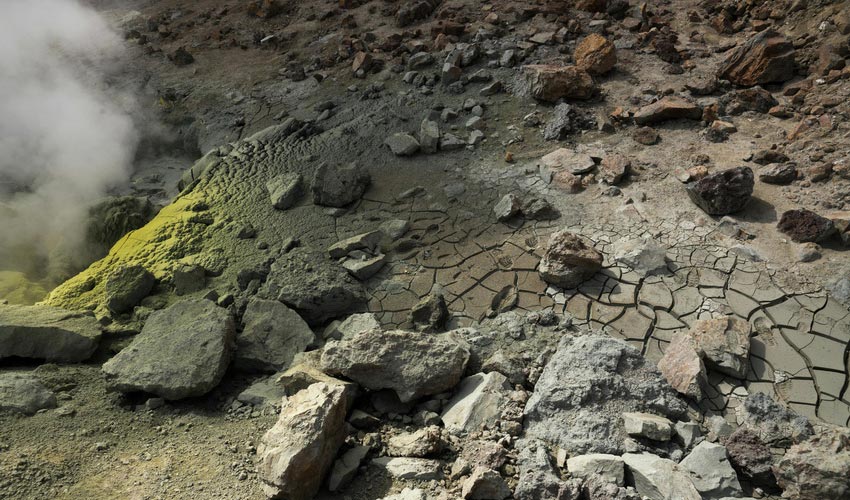
Approximately 3.5 billion years ago, a remarkable transformation took place on our planet: life discovered the art of harnessing solar energy through the process of photosynthesis. This breakthrough originated with marine microorganisms that turned sunlight into sustenance, emerging as pioneers of a new energy frontier. As these tiny beings thrived, they discharged oxygen as a waste product, setting the stage for a monumental shift in Earth’s chemistry. Yet, instead of forming a breathable atmosphere, this liberated oxygen met its match in the iron-rich waters of the oceans, where it swiftly reacted and formed compounds. For eons, the vibrant potential of oxygen remained trapped beneath the waves, hidden from the world and unable to contribute to the life-sustaining atmosphere we know today. This intricate dance of life and chemistry would ultimately lead to profound changes, but in those early days, the oceans bore witness to the silent struggle of new beginnings waiting to emerge.
The Proterozoic Eon – Earth’s Forgotten Epoch of Transformation & Tranquillity
2.5 Billion to 550 Million Years Ago
Spanning an astounding 2 billion years, the Proterozoic Eon stands as the longest chapter in the Earth’s narrative, a time marked by profound transformation followed by an extended period of stability that is often overlooked. During the initial half of this eon, our planet underwent dramatic changes that reshaped its atmosphere and lithosphere, laying the critical groundwork for the complex life to come. In these early stages, the Earth experienced sweeping geological and environmental shifts. The atmosphere started to be infused with oxygen due to the emergence of photosynthetic microorganisms, fundamentally altering the planet’s chemistry and paving the way for the future of life. The tectonic activities that sculpted continents and created vast oceanic basins were in full swing, giving rise to the very foundation upon which land and life would flourish. However, as we transition into the latter half of the Proterozoic, the excitement of active change dwindles, leading to a more subdued era. This second billion years witnesses a remarkable stillness, a period often characterised by a lack of significant geological upheaval and a stagnated evolutionary pace. The vibrant dramas of the earlier eon fade away, giving rise to an epoch that, despite its quiet outward appearance, served as the silent backdrop for the eventual explosion of life that would follow. Thus, while the Proterozoic Eon may be seen as a time of relative inertia, it played an indispensable role in Earth’s history, bridging the gap between chaotic beginnings and the flourishing complexity of life that would soon emerge. It is a testament to the enduring power of patience in nature, transforming the Earth in ways that echoed for aeons to come.
The Dawn of Oxygen – A Planet Transformed
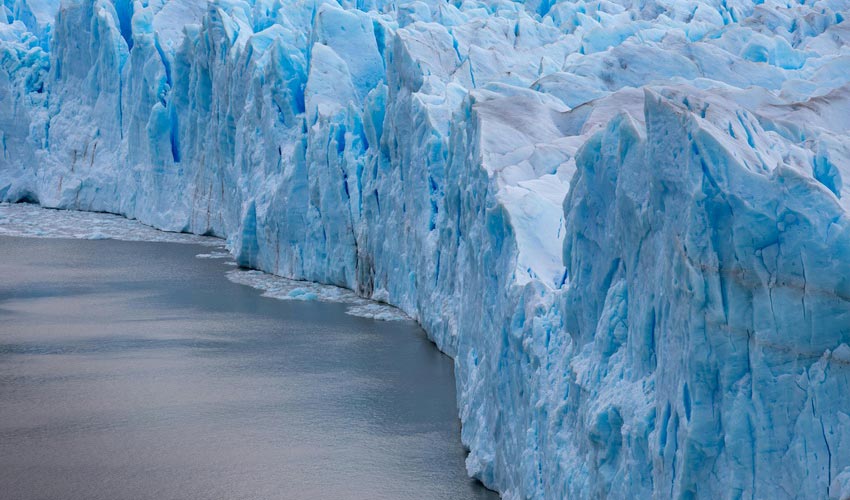
Approximately 2.3 billion years ago, Earth experienced a monumental shift, an extraordinary transformation that would alter the very fabric of its atmosphere and reshape life as we know it. This pivotal event, known as the Great Oxygenation, marked the boundary between the Archaean Eon and the Proterozoic Eon, heralding a new era for our planet. During this time, a significant climatic upheaval occurred: the first Snowball Earth. This period of extreme glaciation acted as a catalyst, setting the stage for an unprecedented infusion of oxygen into our atmosphere. As vast ice sheets blanketed the planet, they captivated the sunlight above and influenced the delicate balance of gases in our environment. With the ancient climates shifting and ice receding roughly 2.3 billion years ago, the melting glaciers unleashed a torrent of oxygen-rich waters, releasing a wealth of oxygen into the atmosphere. However, this newfound abundance of oxygen came at a staggering cost. The very essence of life in Earth’s oceans had evolved to thrive in an anaerobic, oxygen-free world. The influx of oxygen, while vital for the evolution of future life forms, wrought havoc on the existing anaerobic bacteria populations, leading to widespread extinction and upheaval in the ecological landscape. As a result of this, the Great Oxygenation, though a hallmark of progress and evolution, represented a chaotic reckoning. It was a time when life had to adapt or perish in the face of a rapidly changing environment. It serves as a reminder that evolution is often accompanied by both destruction and creation, reshaping not just the Earth’s atmosphere but the very core of life itself.
The Dull Interlude – Earth’s Uneventful Billion-Year Slumber
Between 1.8 billion and 0.8 billion years ago, Earth entered a surprisingly tranquil and uneventful chapter in its extensive history. Known as the “Boring Billion,” this era was characterised not by dramatic geological upheavals or significant evolutionary leaps, but by a profound stillness. Tectonic plates moved at a snail’s pace, life as we know it remained relatively stagnant, and climatic conditions held steady, with few noteworthy changes. Yet, within this seeming monotony, some scientists propose that crucial developments did occur. It was during this period that eukaryotic organisms, those with complex cell structures featuring a nucleus, may have begun to refine key traits, such as sexual reproduction. This evolutionary adaptation would later pave the way for the explosive diversity of life witnessed during the Cambrian Period. Furthermore, this era saw the emergence of simple algae and the earliest forms of plant life. Despite these significant milestones, when viewed against the vast tapestry of geological and biological history that spans over a billion years, the progress made during the Boring Billion can appear rather modest. Perhaps it serves as a reminder that even in the grand narrative of Earth’s story, there are times when rest and reflection are just as vital to evolution as tumult and innovation. After all, even the planet needs moments of tranquillity to prepare for future bursts of creativity and change.
The Dynamic Dance of Earth’s Crust – Unravelling the Enigma of Plate Tectonics
The origins of plate tectonics, a foundational concept in understanding our planet’s geology, remain somewhat shrouded in mystery. Geologists speculate that the Earth’s crust began to fracture into distinct tectonic plates somewhere between 1 to 3 billion years ago, marking an important moment in the planet’s geological history. While some researchers advocate for a more contemporary emergence of tectonic activity, suggesting that this remarkable process could not have taken place during Earth’s early, molten state, the debate continues. The prevailing theory posits that as the intense heat from the planet’s infancy gradually dissipated, the surface transformed from a chaotic sea of magma into a solid crust. This cooling process set the stage for the formation of tectonic plates, forever altering the landscape of our planet. The significance of plate tectonics extends far beyond mere geological curiosity; it has played a crucial role in shaping the evolution of life on Earth over the past billion years. The relentless movement of these plates has forged majestic mountain ranges and deep oceanic trenches, sculpting the very fabric of our planet. This dynamic interplay has not only influenced climate patterns and habitats but has also contributed to the geochemical cycles that nourish life. Additionally, the relentless forces of nature, such as glaciers that ground down towering peaks and the gradual erosion of mountains created by tectonic activity, release essential minerals and nutrients into the soil. These processes were key in transforming Earth from a barren landscape into a rich, diverse environment that could eventually support life, thereby closing the so-called “boring billion” era of geological history. In essence, plate tectonics is not just about shifting rocks; it is a saga of transformation, resilience, and interconnectedness that underpins the history of life itself on our planet.
The Phanerozoic Eon – The Dawn of Modern Life on Earth
From 550 Million Years Ago to the Present
The Phanerozoic Eon marks a transformative era in Earth’s history, beginning 550 million years ago and extending into the vibrant world we know today. This epoch is characterised by the remarkable diversification of life forms, fuelled by the nutrients that cascaded into the oceans as mountains eroded over eons. At the heart of this biological renaissance lies the Cambrian Explosion, a significant moment that reshaped the tapestry of life. During this extraordinary period, a stunning array of life emerged, birthing many of the key lineages that continue to thrive across oceans and land today. It is particularly significant because it heralded the emergence of the first animals, though the fossils of these ancient pioneers are elusive. Remarkable creatures such as Hallucigenia and jellyfish serve as vital clues, revealing glimpses of the early animal kingdom that populated our primordial seas. Among the dazzling array of new life forms that flourished during the Cambrian Explosion were organisms with transformative adaptations: sea creatures developed complex eyes and articulated legs, molluscs made their debut, predators evolved sophisticated jaws and teeth, and worms adapted with plume-like gills, showcasing the ingenuity of evolution. This era set the stage for the intricate web of life that continues to evolve today, making the Phanerozoic Eon a defining chapter in the story of our planet.

The Evolution of Flora – A Journey from Ocean Depths to Terrestrial Wonders
Around 470 million years ago, a monumental shift occurred as plants transitioned from their aquatic origins to thrive on land. This ground-breaking migration paved the way for a vibrant terrestrial ecosystem. Fast forward another 100 million years, and our planet showcased an array of plant life, complete with roots, leaves, and sturdy stems that resemble the flora we cherish today. Intriguingly, during the era when dinosaurs roamed the Earth, grasses had yet to come into existence, revealing a prehistoric landscape vastly different from the one we know now.
The Birth of Supercontinents – Defining Milestones in Earth’s Evolution
The emergence and disintegration of the supercontinents Gondwana and Pangea were important events that shaped our planet’s geological narrative. These colossal landmasses influenced Earth’s history in profound ways, dictating not only the configuration of continents but also impacting climatic conditions across the globe. Their immense scale, positioning in relation to Earth’s polar regions and the volcanic activity associated with them, played critical roles in determining the diverse climates that characterised the Phanerozoic eon. Understanding these supercontinents offers us invaluable insights into the climatic, biological, and geological transformations that have unfolded over millions of years.
Dinosaurs – The Majestic Titans of the Mesozoic Era
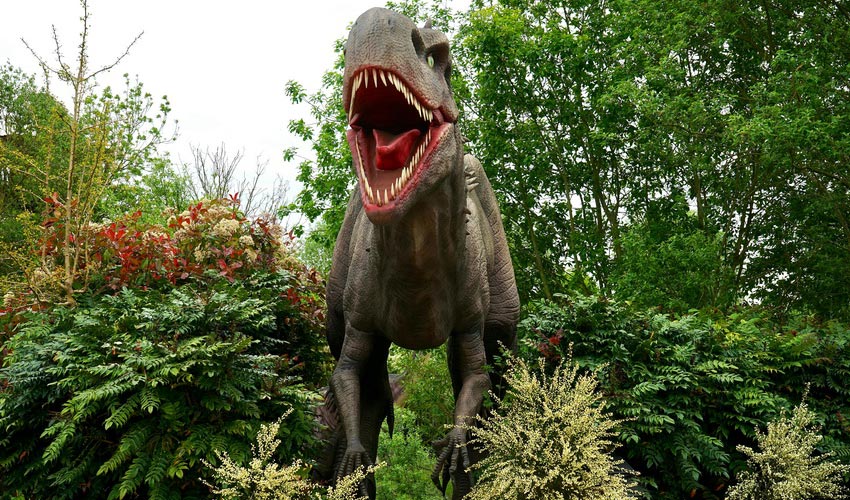
Dinosaurs hold a remarkable place in the narrative of our planet’s history, crafting a vivid tapestry of life that captivated the Earth for over 180 million years. These magnificent creatures first emerged around 250 million years ago, ruling the land with unparalleled dominance until their sudden extinction 66 million years ago. You may recognise the terms Triassic, Jurassic, and Cretaceous. These illustrious epochs serve as the framework for the Mesozoic Era, a significant chapter in Earth’s geologic timeline. Within these three dynamic periods, dinosaurs flourished in diverse ecosystems, leaving behind a legacy that continues to intrigue and inspire us today. Join us as we delve into the captivating world of dynastic reptiles, exploring their evolution, habitats, and the extraordinary events that led to their reign and eventual demise in this enchanting era of Earth’s history.
The Great Cull – A Voyage Through Earth’s Mass Extinctions
Throughout the annals of history, Earth’s biosphere has undergone cataclysmic transformations that reshaped the trajectory of life itself. Since the magnificent burst of biodiversity known as the Cambrian explosion, our planet has witnessed six monumental mass extinctions, an alarming reality that includes the on-going, human-induced crisis we find ourselves in today. These catastrophic epochs served as both destruction and genesis; they dramatically reduced the number of species thriving on our planet, yet, from the ashes of these losses, nature has proven resilient. Over the course of tens of millions of years, the remnants of life that withstood these calamitous events gave rise to an astonishing array of new organisms, ultimately sculpting the rich tapestry of life that graces us today. As we venture into these chapters of our planet’s history, we uncover not only the depths of loss and extinction but also the remarkable capacity for rebirth and adaptation that characterises life on Earth. Join us in exploring how the echoes of the past inform the urgent challenges we face now and the resilient spirit that continues to define the evolutionary journey.
Humanity’s Impact – The Anthropocene Era
Some view evolution through a narrow lens, mistakenly believing that the emergence of humans signifies a final destination. In reality, evolution is an on-going journey with no predetermined endpoint, one that will wend its way forward long after our species has vanished from the Earth. We are, in fact, a mere by-product of natural processes spanning billions of years. To put our existence into perspective, consider this: if we were to compress the entire history of the Earth into a mere 12-hour timeline, humans would emerge only 11 hours, 59 minutes, and 58 seconds into that fleeting period. Our presence on this planet is extraordinarily recent. Yet, defining Earth’s history inevitably culminates with the evolution of Homo sapiens, as that is where we find ourselves today. In recognition of our profound impact, some scientists advocate for classifying the current era as the Anthropocene, a proposed geologic epoch marked by human influence. The Anthropocene would be characterised by events commencing in the aftermath of World War II, a period when humanity began to dramatically alter the Earth’s climate and generate massive quantities of waste, particularly plastics. The ubiquity of plastic pollution, now strewn across landscapes and seascapes worldwide, will leave an indelible mark on the geological record, becoming interwoven with future rock formations. In addition to this, we are witnessing rapid global warming and a catastrophic mass extinction event, all hallmarks of our species’ transformative impact on the planet.
“What have they done to the earth?
nWhat have they done to our fair sister?
nRavaged and plundered and ripped her and bit her
nStuck her with knives in the side of the dawn
nAnd tied her with fences and dragged her down” – Jim Morrison
While the broader geological community has yet to formally accept the Anthropocene as a distinct geologic period, momentum is building, and this designation could soon find its place in the annals of Earth’s geological history. As we grapple with our legacy and the on-going consequences of our actions, the Anthropocene serves as a powerful reminder of humanity’s role within the grand tapestry of life on Earth.
The On-going Odyssey of Our Planet
Earth, our captivating home in the endless cosmos, stands alone as the only known cradle of life. With the advent of innovative space exploration technologies, particularly the revolutionary James Webb Space Telescope, scientists are uncovering an unprecedented number of Earth-like planets scattered across the universe. As we study the mysteries of these distant worlds, we may also unearth profound insights about our own planet’s past. Every new discovery has the potential to illuminate the intricate narrative of Earth, our cherished pale blue dot, enriching our understanding of its history and, perhaps, our place in the universe.